 You are here:
Rivet Nut vs Self-Clinching Nut: Appliance and Cabinet Guide - High-Mix
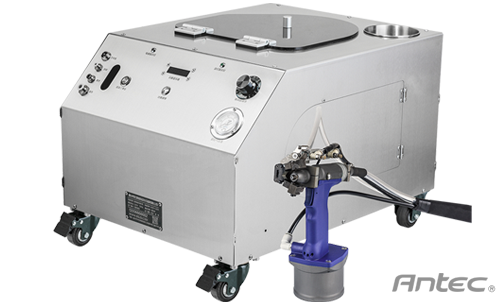
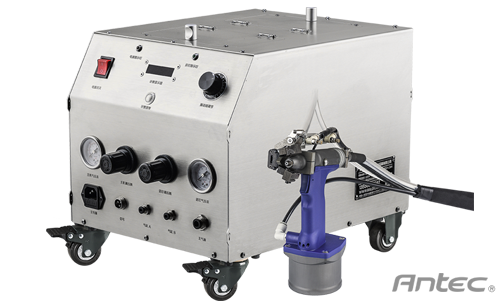
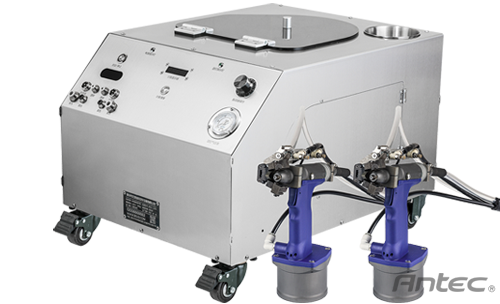
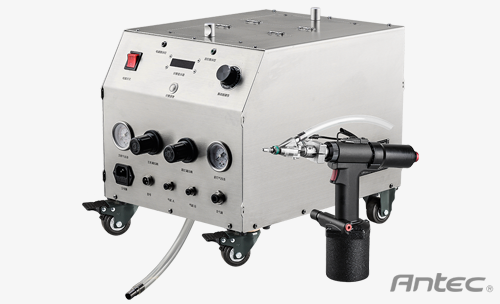
Appliance and cabinet shops keep coming back to the same question on thin sheet: rivet nut or self-clinching nut? Both create an internal thread in a thin panel, but the process, the equipment and the best use case differ sharply. Here is how they compare on the shop floor, and where a quick-change rivet nut gun earns its place.
When specifications change several times a shift, the tool has to switch in seconds without losing rivet quality. The notes below cover quick-change rivet nut gun work on a high-mix line.
What high-mix production lines with tight riveting tolerances should remember: how the two processes differ; how to choose on the shop floor; sizing guidance; trial the quick-change rivet nut gun, then fix the process.
1. How the Two Processes Differ
| Item | Rivet nut | Self-clinching nut |
|---|---|---|
| Forming method | Axial pull and cold forming with a quick-change rivet nut gun | Radial press-in with a clinching press or punch press |
| Equipment | Handheld or quick-change rivet nut gun, flexible | Needs a clinching press or die set, fixed station |
| Sheet thickness | Friendly to thin sheet, aluminum extrusion and irregular parts | Demanding on sheet thickness and hole consistency |
| Rework on site | Can be re-fitted in place after powder coating | Hard to rework once pressed wrong, needs dedicated equipment |
| Typical use | Cabinet doors, appliance panels, pallets | High-volume standard flat panels, pre-assembled chassis parts |
2. How to Choose on the Shop Floor
Appliances and kitchen equipment mean many variants, irregular parts and a lot of rework after powder coating, which suits the flexible rivet nut. Aluminum extrusion, battery trays and energy storage cabinets, meaning any structure that gets taken apart for service, also favor rivet nuts. For high-volume standard flat panels pre-assembled on a die-based line, the self-clinching nut is faster. Many plants run both: clinch the standard parts, rivet the irregular ones and the rework.
Every specification change is a chance to lose consistency, which is why the changeover routine is trained.
3. Sizing Guidance
M3-M6 covers appliance thin-sheet panels, M6-M10 covers cabinet doors and mounting plates, and M10-M12 covers aluminum extrusion beams and trays; on aluminum parts use a knurled rivet nut rated for aluminum and verify with a pull-out test. Appliance solutions are on our appliance, kitchen and hardware furniture riveting page, cabinet solutions on the power distribution cabinet and electrical equipment page.
4. Trial the Quick-Change Rivet Nut Gun, Then Fix the Process
When you are not sure, hand the part and the sheet thickness to an engineer and run one sample set with riveting and one with clinching, then compare forming, pull-out strength, appearance and rework cost before deciding. Antec can run a rivet nut sample at your plant; for general background see quick-change rivet nut gun product overview.
Precision Questions
Aluminum extrusion, irregular parts and structures that get disassembled usually favor the rivet nut; clinching is more demanding on the profile and the press, so confirm with a side-by-side trial.
Set a rivet nut into the prepared hole right through the coated part; it takes a few minutes and does not damage the finish.
Quick-Change Rivet Nut Gun at a glance: 11,000 N pull force, 80 cycles per minute, standard and quick-change models in stock, pre-sales simulation and full-cycle maintenance.
Operator training is part of commissioning, so the quick-change routine is proven before production starts.
High-mix line? Start with the changeover
Send the specification list and the quality limits. We will simulate the solution, propose the quick-change configuration and quote the training.
 Previous